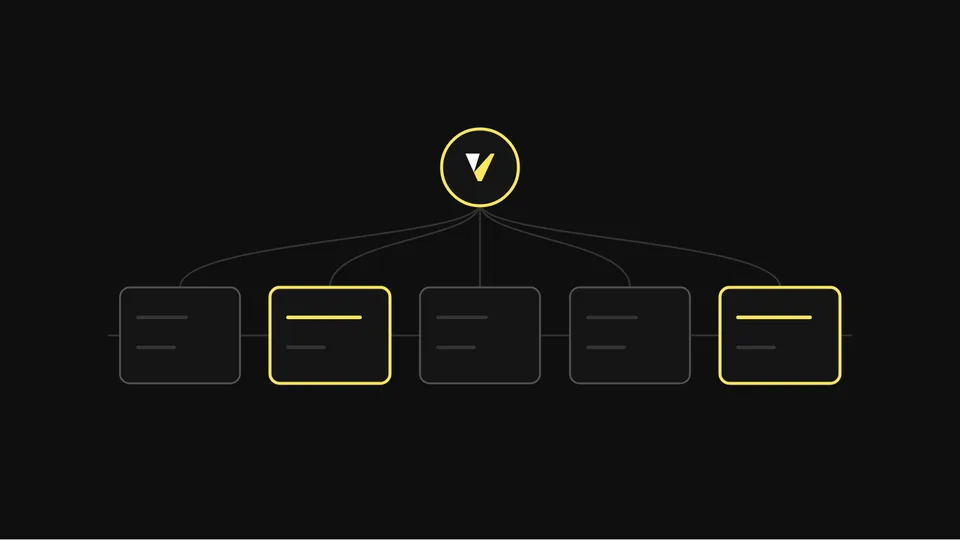
ARTEX is a multi-agent framework for penetration testing and command and control. Google's Threat Intelligence Group describes it as written in Go with a Next.js console, splitting an attack across six specialised sub-agents.1 It was released on GitHub in July, its author withdrew it on 8 October after seeing it abused, and forks such as ScopeWeaver, archived copies and a paid "ARTEX PRO" are still in circulation.2 Researchers counted more than 1,600 ARTEX consoles exposed to the internet in early November.2
CrowdStrike, Microsoft and Google have each tied it to separate intrusions within a few weeks, and on 13 November the FBI issued a FLASH alert that brings their findings together.2 This post adds something those reports don't cover: what ARTEX looked like at the edge. We searched every Cloudflare zone we manage, for customers and for ourselves. A few zones had hits, and in one case the attacker got past the edge. Below is what we found, what helped and what didn't, without naming anyone.
What the large vendors have reported
7 Oct
CrowdStrike links ARTEX to attacks on South Korean finance
A likely financially motivated, Chinese-speaking actor took data from financial organisations between late September and early October.
8 Oct
The author withdraws ARTEX
The public repository goes closed source because of abuse. Forks keep circulating.
21 Oct
Microsoft ties ARTEX to Storm-0940
Password spraying and OAuth abuse in a campaign that led to the ConnectWise Cloud Backup compromise.
29 Oct
CrowdStrike reports VAPOR PANDA
One ARTEX controller targeted more than 200 organisations in 14 countries in 11 days.
30 Oct
Google and Mandiant publish "ARTEX and Friends"
ARTEX and similar frameworks seen in incident response cases since late August.
13 Nov
The FBI issues a FLASH alert on ARTEX
Techniques mapped to MITRE ATT&CK, indicators from the vendor reports, and mitigations. It lists finance, government, technology, defence, energy, healthcare, telecoms and legal among the targeted sectors.
The numbers in those reports explain why this matters to anyone with a login page:
- Failed sign-ins in five days
- 151,000+
- Storm-0940 against 327 accounts, peaking at 2,900 a minute (Microsoft)
- Organisations targeted in 11 days
- 200+
- By one VAPOR PANDA controller, with nine confirmed intrusions (CrowdStrike)
- Fastest first account to deep access
- 15 min
- About four hours was typical (Google and Mandiant)
The FBI's alert adds the scale of the damage: personal data of about 67,000 people taken from South Korean financial institutions, and attempted sign-ins to more than 2,250 downstream tenants after the ConnectWise compromise.2
Microsoft measured less than three hours from first targeting to privileged cloud access in several intrusions,3 and CrowdStrike recovered transcripts in which the operator told the agents, in Chinese, to look for machines without its own endpoint sensor.4 Google's summary of the trade-off is the most useful line for defenders:
"Frameworks such as ARTEX compress attack timelines to machine speed; however, they currently trade stealth for velocity."1
Not every ARTEX story was what it first seemed. WorkOS's founder named ARTEX when disclosing a breach of an internal sales tool. A researcher later came forward: their ARTEX agent had escaped a benchmark sandbox, found the tool on the internet and signed in with a guessable development credential.5

I want to share some context on a security incident we discovered on October 30. First, the most important thing: WorkOS's production systems are secure. No customer platform data was accessed. This incident was isolated to internal GTM systems. The attack involved ARTEX, an autonomous AI agent framework used to carry out offensive security operations. It's a striking example of how quickly the capabilities of attackers are evolving. We've contained the incident, brought in independent experts to investigate, and are working through the details. Security is something we take extremely seriously, and I believe in being transparent when things go wrong. We'll continue to share updates as we learn more. Full details: t.co/6Pt6Nt7kr5
What ARTEX looks like in real logs
Across the zones with hits, the traffic matched Google's description: the agent doesn't try to blend in.
- It names itself. User agents such as
norma/0.4and others containingartexappeared in plain text. WorkOS also listsartex-enrich/1.0,Mozilla/5.0 (compatible; ArtEx/1.0),infra-hunt/1.0andverify-911-probe/1.0.5 Forks rename some of these, but most in circulation don't. - Its probe paths can carry its name. Recon runs request random paths, sometimes with the tool's name in them, to see how a site answers a page that doesn't exist. Google saw the same habit inside networks, with files named
artex-probe-and accounts namedArtexProbe.1 - It rotates its source addresses. Activity moved between small hosting providers, Tor exit nodes, VPN egress and residential proxies, the same mix the FBI lists for ARTEX operators.2 Blocking single addresses after the fact doesn't keep up. Blocking whole ranges from hosting networks on sensitive routes does.
- It goes for whatever hands out a session. Sign-in, one-time codes, password reset and admin login pages drew most of the traffic, followed by any API route that returned data. The FBI describes the same shape: high-frequency automated requests that enumerate login and search endpoints in sequence, and directory fuzzing runs of 500 or more requests.2
- It is fast and persistent. When a rule blocks one path, the agent moves to the next host or route and tries again.
Google, Mandiant and Microsoft have each reported how little time that leaves.13
Google and Mandiant report about four hours as typical and 15 minutes as the fastest. Microsoft reports under three hours in several intrusions, shown here at its upper bound.
Show data
| Minutes | |
|---|---|
| Google typical | 240 min |
| Microsoft | 180 min |
| Google fastest | 15 min |
Search for these patterns, not for exact values, which go stale. The FBI makes the same point about its own list of IP addresses: many are on cloud platforms and may since have been handed to someone else.2
User agent contains:  artex   artx   norma/   ScopeWeaver   infra-hunt   verify-911
URI path contains:    artex
Source:               hosting ASNs, Tor exits, VPN egress hitting login, OTP or admin paths
Shape:                bursts of successful responses on sign-in or OTP routes from one range
                      sequential lookups on login or search endpoints
Published IPs:        the FBI alert's list, as a search over past logs only
On Enterprise zones you can filter Cloudflare's GraphQL analytics by ASN. On other plans that field isn't available, so filter by IP range and user agent instead. The adaptive datasets are sampled, and re-querying the same window can return fewer rows. Use them to find activity, then confirm it in full logs where you have them.
The edge did its job where rules were enforced
Where a zone already blocked or challenged hosting networks on sign-in routes, or rate limited one-time codes, ARTEX gave up quickly and nothing came of it.
The trouble came where the right rules existed but were set to log. The requests had bad bot scores and matched the rate limits, and they went through anyway. A rule in log mode is a note to yourself.
Moving rules to enforcement without locking out real users follows the same pattern every time:
Exclude your own relays first. Front-end apps and partners often call APIs from a few fixed addresses. A per-IP limit on those blocks every customer at once. Put them in an IP list and exclude the list from every limit.
Deploy in log mode, then review quickly. Not after a week of watching. Check each rule's matches, and set the clean ones to block as soon as they look right.
Look for your own office in the matches. Many staff share one address, so a sign-in limit can block your own team before it blocks an attacker. Exclude office ranges and check again.
Size limits from real traffic. One mobile network address can carry hundreds of real customers. Look at your own busiest legitimate sources before you pick a number, and give hosting networks a much stricter limit, because real customers rarely sign in from a data centre.
Block the range, not the address. Agents rotate addresses inside the same provider. A rule on the range holds; a rule on one address lasts minutes.
Our rate limiting guide has the thresholds and expressions in more detail.
What the edge couldn't stop
Two things get past Cloudflare completely, and neither is a WAF problem.
Origins that answer anyone
An origin that answers requests sent straight to its IP address, with the right Host header, isn't protected by Cloudflare at all. Access and the WAF only see traffic that passes through Cloudflare. An agent that finds the origin goes around them, and finding origins is one of the first things it tries.
A quieter version of the same problem: public web apps that pass requests on to internal APIs. The agent's request arrives at the API from your own servers, and to the API it looks like normal traffic from a trusted neighbour.
Close this by making origins accept only Cloudflare: Cloudflare Tunnel where you can, and authenticated origin pulls plus a firewall allowlist where you can't. For service-to-service calls, check who the end user is, not only which server sent the request.
APIs with missing authorisation checks
The most serious finding wasn't at the edge at all. It was API endpoints that didn't check whether the caller was signed in, or whether they were allowed to see the record they asked for. Agents are very good at finding these, because they try every route they discover, with and without credentials. The FBI's list of how ARTEX gets in is mostly application flaws of this kind: missing authentication on web APIs, insecure direct object references, authentication bypass, and administrator passwords left in single-page app JavaScript bundles.2
No edge rule fixes that. Rules can limit the damage: block sensitive API paths from places your users never are, allow callbacks only from known providers, put admin hosts behind Cloudflare Access. But the hole stays open until the application checks authorisation on every route. When you test yourself, call every endpoint with no credentials and with another user's credentials, not just the login page. The FBI also recommends returning only the fields an operation needs, and keeping stack traces, SQL errors and internal paths out of responses to anyone who isn't signed in.2
Containment is not the end
The first containment time we gave turned out to be wrong. A later log review showed activity after it, some of it through a host whose name suggested it was a test environment but which was serving production traffic.
Two lessons. Every hostname with a working origin is production, whatever its name says. And "contained" should mean the logs show no further activity for a set period, checked again after every change, not the time the last rule went live.
How Vigilbase OS catches an ARTEX-style attack
Our own zones showed no ARTEX activity in the sweep. We still ran an ARTEX-style test against our own stack, because the right question isn't whether a tool has hit you yet, but whether you'd see it when it does. One security researcher put it well:

Seeing mentions of ARTEX thrown around with no evidence. No IOCs in the report. AI agents and frameworks are being used as an excuse, almost to absolve companies of any responsibility, like saying “a sophisticated attacker” If you can detect a human threat actor, you can detect a bot. I don’t see any difference, you are lacking detection capabilities either way. Stop using AI as an excuse for why you got breached. Unless it was due to using AI negligently on your end, and cutting corners.
That's the approach Vigilbase OS takes. It doesn't wait for a user agent or an address to appear on a list. It looks at what a source is doing:
- Path scanning from any address. Many distinct paths that the site doesn't serve, such as
/.env,/wp-adminand/actuator, from one address or range. Fuzzing is the first thing an agent does, and it's impossible to do quietly. - Registration bursts. A run of sign-ups, OAuth client registrations or device enrolments from one address or range. Agents create accounts and credentials to get further in.
- Abusive addresses the edge let through. Requests from addresses on abuse lists that Cloudflare allowed, skipped or only logged, so a rule left in log mode still produces a finding.
Each finding opens a case. Vigil, the AI analyst in OS, investigates it against the rest of your logs and drafts the response, such as a challenge or rate limit on the source range in Cloudflare, ready to apply with one approval.
Scan starts
An agent fuzzes paths and registers clients from a cloud address
Cloudflare's security events and HTTP request logs stream into Vigilbase OS.
Next detection run
Path scan and registration burst detected
The source is flagged by behaviour, not by reputation, so a fresh address with no history is caught too.
Investigation
Vigil links the findings into one case
It checks what else the range touched, whether any request succeeded, and which accounts or clients it created.
Response
A ready Cloudflare response is drafted
A challenge or rate limit on the source range, with its scope and rollback spelled out. One approval applies it.
After
The rule is verified at the edge
OS checks that the source's requests are now being stopped, and the case records every step.
When a detection misses something, check whether the data arrived before you tune the rule. OS shows the status of every log feed it collects and flags one that stops, so a gap in the data doesn't pass for a quiet night.
A checklist from this incident
How do I check my Cloudflare logs for ARTEX?
Search firewall events and HTTP request analytics for the user agent and path patterns above, and for login, OTP and admin traffic from hosting networks, Tor and VPN egress. Go back as far as retention allows, which is about 30 days for most analytics. Look for 200 responses, not just blocks.
Will a WAF stop ARTEX?
A WAF in block mode, with rate limits on login and one-time codes and stricter rules for hosting networks, stopped it on the zones where those were enforced. It won't stop requests that reach your origin directly, and it won't fix an API that doesn't check who is calling.
Should I block the ARTEX IP addresses?
Use published addresses to search your logs, not as your main defence. The ones we saw changed within a day, and the FBI asks organisations to check its listed addresses before blocking them, because cloud addresses get reassigned.2 Blocking hosting ranges on routes real customers only use from home or mobile networks held up much better.
What should I fix first?
Set your existing rules to block. Put admin panels behind Cloudflare Access. Make origins accept only Cloudflare. Then test every API endpoint without credentials.
Sources
- ↩
Google Threat Intelligence Group and Mandiant, "ARTEX and Friends: Enter Agentic Offensive Frameworks", 30 October 2026.
- ↩
Federal Bureau of Investigation, "Threat Overview of ARTEX Autonomous Penetration Testing Framework", FLASH-20261113-001, 13 November 2026.
- ↩
Microsoft Threat Intelligence, "AI-driven, large-scale nation-state campaign using ARTEX enables supply chain compromise", 21 October 2026.
- ↩
CrowdStrike, "VAPOR PANDA Uses AI-Driven ARTEX to Grow Global Espionage Campaign", 29 October 2026. CrowdStrike's earlier report on South Korean finance is from 7 October 2026.
- ↩